
📋 Free Doctor Visit Preparation Tool
Notice the Changes. Track the Patterns. Prepare for the Conversation.
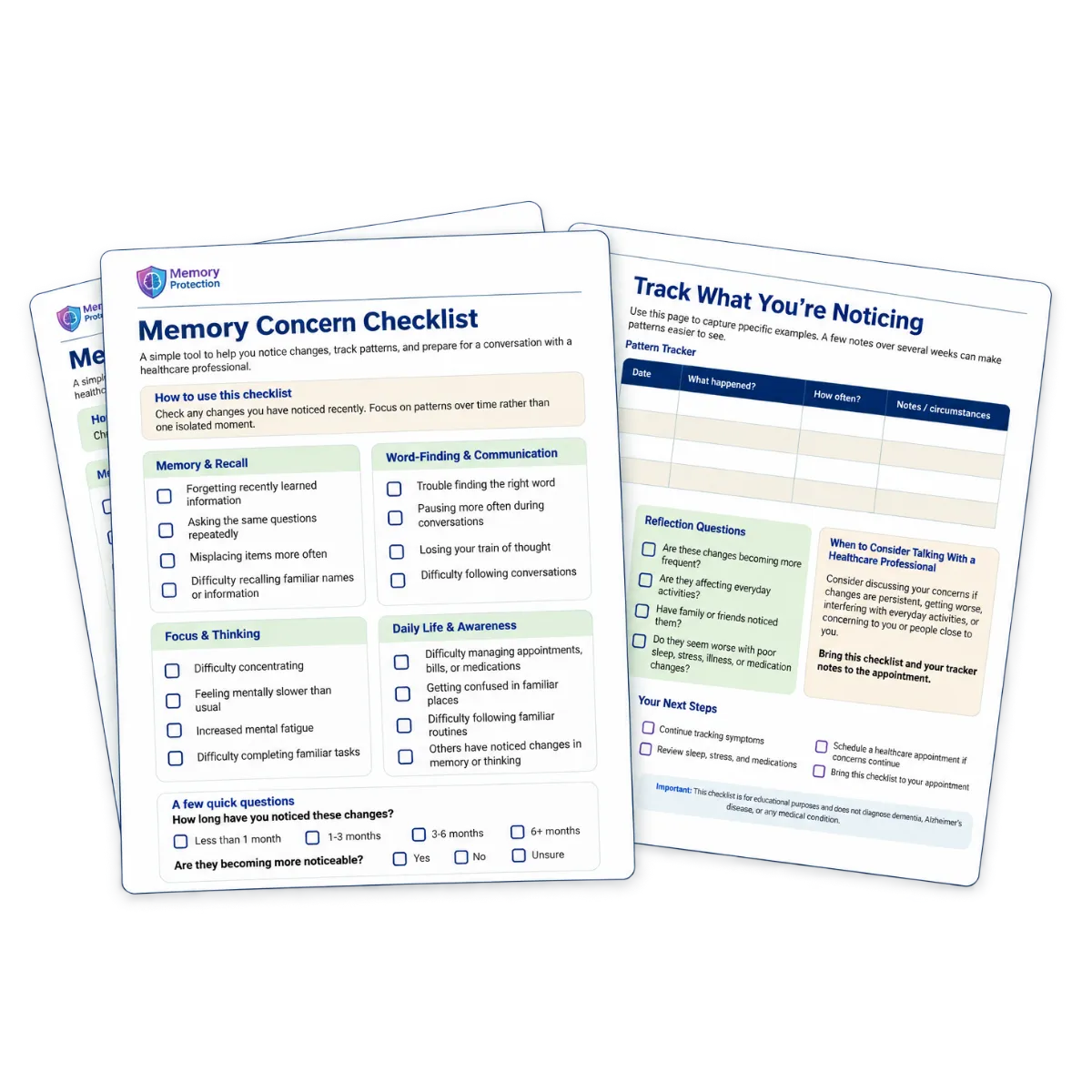
Use this free printable checklist to track changes in memory and thinking, identify patterns over time, and prepare for a more informed conversation with a healthcare professional.
Designed for individuals and family caregivers seeking clarity before clinical conversations.
Note: This tool is non-diagnostic and prepared solely to facilitate doctor-patient communication.
3 SIMPLE STEPS
How to Use the Checklist
Use the checklist to record what you're noticing, track patterns over time, and prepare for a conversation with a healthcare professional.
Notice
Check the changes you've been noticing in memory, thinking, communication, or everyday life.
Track
Use the pattern tracker to record when changes happen and how often you notice them.
Discuss
Bring your observations with you if you decide to speak with a healthcare professional.
This checklist is for educational purposes only and is not a diagnostic tool.
WHAT'S INSIDE
What You Can Track
The checklist helps you organize changes you're noticing across five areas of memory, thinking, and everyday life.
1. Memory & Recall
Recent conversations or appointments
Misplacing everyday items
Repeating questions or stories
2. Word-Finding & Communication
Trouble finding the right word
Pausing during conversations
Changes in communication
3. Focus & Thinking
Difficulty concentrating
Trouble planning or organizing
Changes in decision-making
4. Patterns Over Time
When changes happen
How often you notice them
Notes about circumstances or patterns
5. Daily Life & Awareness
Changes in familiar routines
Difficulty managing everyday tasks
Changes noticed by you or others
IMMEDIATE DOWNLOAD
Turn Worry into Actionable Clarity
Arrive at your next medical consultation equipped with documented, objective observations rather than vague anxieties. Download the structured checklist designed to guide meaningful clinician conversations.
- 100% Free - Instant PDF delivered to your inbox
- Printable offline template for personal notes
- Zero clinical jargon or diagnostic labeling
Request Free Download
Enter your email to receive the full checklist instantly.
FAQ
Common Questions
Whether you are noticing subtle changes in your own routine or looking out for a loved one, this tool gives you structured clarity to approach healthcare providers with confidence and precise observations.
Important Note: This checklist is strictly a non-diagnostic observation guide and does not replace formal clinical assessment.
Is this a medical diagnostic or dementia test?
No. This is strictly an informal observation and tracking tool designed to help you catalog noticeable memory, focus, and behavioral patterns. It is completely non-diagnostic and should be shared with a qualified physician or geriatric specialist for any clinical evaluation.
Can I complete this checklist for a family member?
Yes, absolutely. Many caregivers, adult children, and spouses complete this guide on behalf of a loved one. Recording specific, dated examples from third-party observation often provides physicians with valuable real-world context during health reviews.
What should I do after completing the checklist?
Once you have completed your notes, schedule an appointment with a primary care doctor, neurologist, or memory specialist. Bring your filled checklist to your visit so your doctor can review tangible observations rather than relying solely on memory in the clinic.


